The Hormel Institute
SURE Research Intern · Robert Clarke’s lab
- Question
- How does endocrine resistance reshape breast cancer metabolism, and what role might oxygen availability play?
- My contribution
- I performed cell-culture and protein-based experiments, interpreted complementary metabolic evidence, and developed an oxygen-availability protocol with mentor feedback.
- Status
- Summer internship completed; manuscript collaboration ongoing.
Methods & project details
Research context & the oxygen question
In Robert Clarke’s lab at the Hormel Institute, I investigated metabolic changes and possible therapeutic vulnerabilities associated with endocrine resistance in breast cancer. The project focused on mitochondrial metabolism, the succinate–fumarate pathway, and how cells respond to changes in oxygen availability.
One question was whether oxygen availability contributes to the hypoxic-like metabolic behavior of resistant breast cancer cells. With feedback from my mentor, I developed a protocol to investigate that question and worked with experimental evidence from several complementary approaches.
Experimental work & evidence
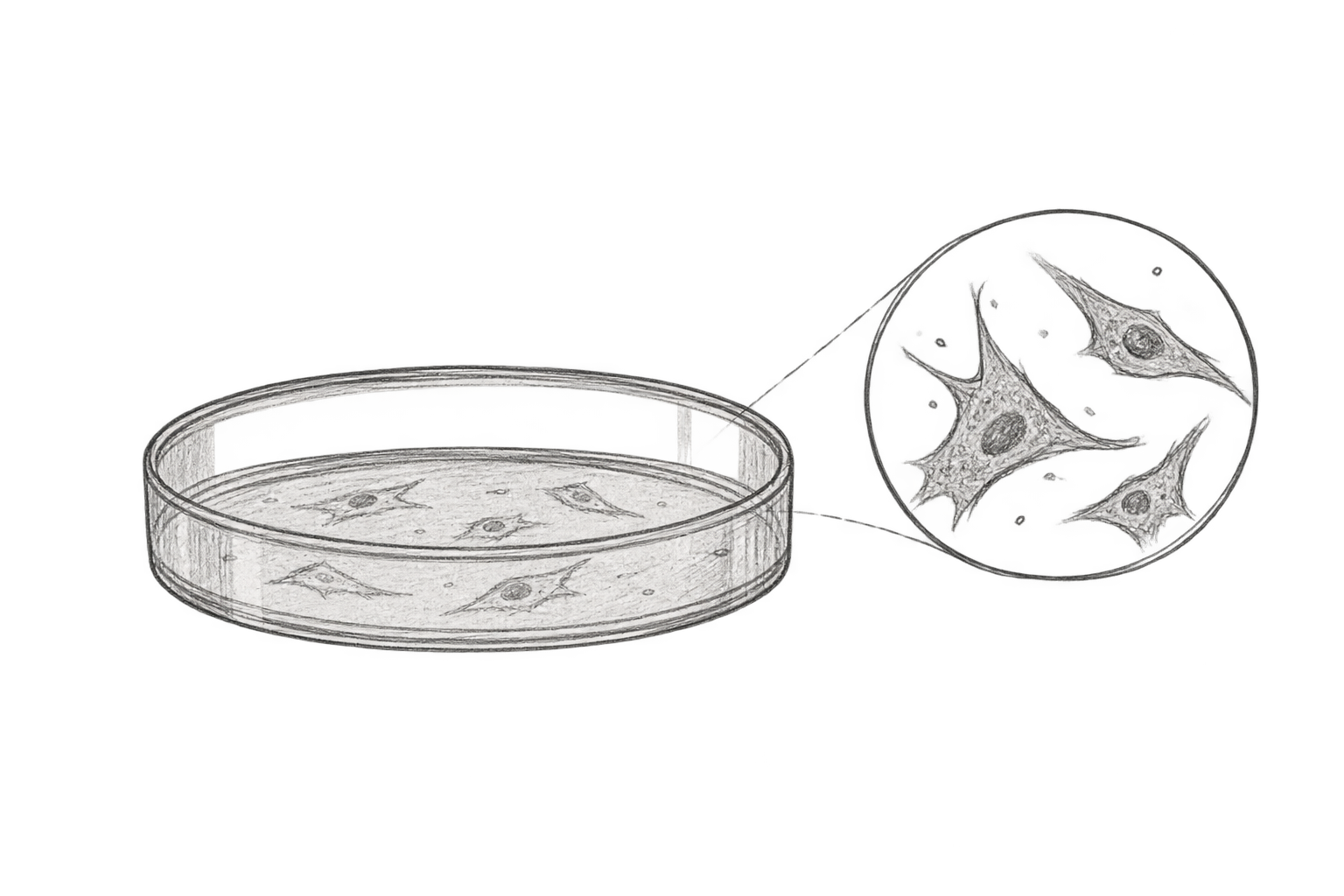
I independently maintained breast cancer cell cultures and performed protein preparation, Western blotting, and cell-growth and migration assays. These experiments helped characterize the features associated with endocrine resistance.
The analysis brought together results from metabolic assays, imaging, flow cytometry, Seahorse analysis, and isotope-tracing studies. My work included interpreting those results alongside one another and developing the oxygen-availability protocol with mentor feedback. The project combined the practical work of maintaining experimental systems with the task of interpreting different kinds of evidence about cellular metabolism.
Symposium & ongoing manuscript
I presented a poster and flash talk at the Hormel Institute’s 2026 Summer Research Symposium. The presentation, with A. K. Yadav and Robert Clarke, was titled Mapping Endocrine Resistance–Associated Phenotypes and SDH-Linked Metabolic Vulnerability in Breast Cancer Cells.
The full-time summer internship has finished, and the manuscript collaboration continues. My contribution includes drafting and revising assigned sections, bringing together relevant literature and experimental evidence. That writing extends the project beyond the summer placement while the manuscript remains in progress.